


Your transportation advocate for metropolitan regions
LEARN MOREINTEREST GROUPS
AMPO develops strategies and techniques to meet the diverse needs of MPOs, projects, and activities.
POLICY
AMPO helps shape policy that benefits all MPOs in order to craft a metropolitan vision for the future.
RESOURCES
AMPO offers vast resources for MPOs seeking education in any facet of the metropolitan planning field.
JOB BOARD
AMPO connects MPOs to new opportunities and helps MPOs reach a large network of professionals.

Amped Up – AMPO’s Podcast Debut
We're excited to announce AMPO's inaugural podcast, Amped Up! This podcast will serve as a deep dive into the world... read more →
December 13, 2023

MPO Institute – Coming This Spring
The MPO Institute, the newest of the AMPO Research Foundation Programs, is launching this Spring! The MPO Institute supports the... read more →
December 1, 2023
AMPO Survey Report: Unobligated Balances & Project Timeline
AMPO recently distributed a survey to membership between May 24 and July 31, 2023 focused on unobligated balances and carry... read more →
September 12, 2023
NICR MPO Congestion Reduction Training
The National Institute for Congestion Reduction (NICR) has announced the arrival of brand-new training program designed especially for MPO Board... read more →
September 6, 2023
2023 AMPO Annual Conference Workshops & Activities
The 2023 AMPO Annual Conference in Cleveland, Ohio is just around the corner. We have a packed agenda with illuminating... read more →
August 11, 2023

2023 AMPO Awards – Submissions Are Open
Is there a person, project, or MPO you'd like to recognize for outstanding work and/or achievements? Nominations for the 2023... read more →
July 10, 2023
FEATURED EVENT
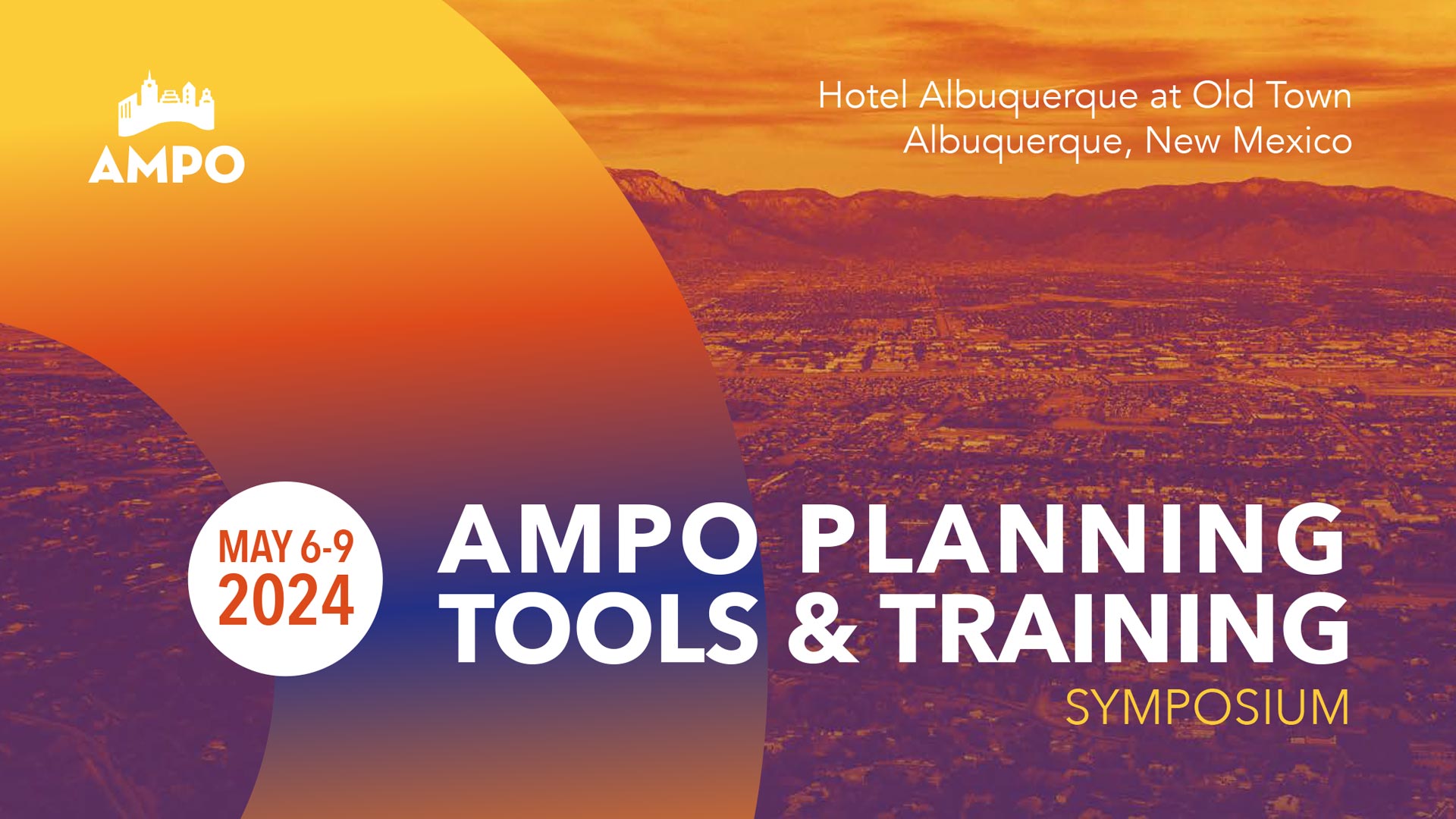
2024 PLANNING TOOLS & TRAINING SYMPOSIUM
The 2024 Planning Tools & Training Symposium is scheduled to take place in Albuquerque, New Mexico, May 6-9, 2024. Please be sure to save the date and check back to our website as we add more detailed information in the months ahead. The AMPO Planning Tools and Training Symposium is tailored to the requirements of MPOs as well as the challenges associated with meeting such requirements and structured to meet the needs of small, medium, and large MPOs.

BECOME A MEMBER
WHY JOIN AMPO?
POLICY
AMPO is a 501c4 non-profit. This designation allows us to lobby for the policy positions that we craft with our members, in the interests of all MPOs. In SAFETEA-LU, AMPO successfully lobbied for the PL increase. We know that the next reauthorization is not about a “single win,” and have been working with our Board, the member driven Policy Committee, Hill Staff, MPOs, and Associations in order to craft a metropolitan vision for the future.
BECOME A MEMBER
WHY JOIN AMPO?
TECHNICAL
AMPO is recognized as the leader in providing technical expertise and assistance to the MPO community. The member run Technical Committee is working to define the planning practices that lead to development of good systems. The three AMPO Work Groups, Travel Modeling, Air Quality, and Operations, each meet twice a year to share their expertise, network, learn and advance the MPO technical community.
BECOME A MEMBER
WHY JOIN AMPO?
EDUCATION
AMPO offers the best tools and resources for MPOs seeking to gain knowledge in any facet of the metropolitan planning field. The AMPO Annual Conference is quickly becoming known as the premiere event for MPOs to learn and network. Sessions are taught by experts and offer a combination of presentations and hands-on learning.
BECOME A MEMBER
WHY JOIN AMPO?
COMMUNICATIONS
AMPO offers online, email, and archived resources. aMPO eMAIL, our bi-weekly newsletter offers pertinent updates in all areas of metropolitan planning and is subscribed to by over 1,200 transportation professionals. Our website is full of surveys, policy archives, and events.